
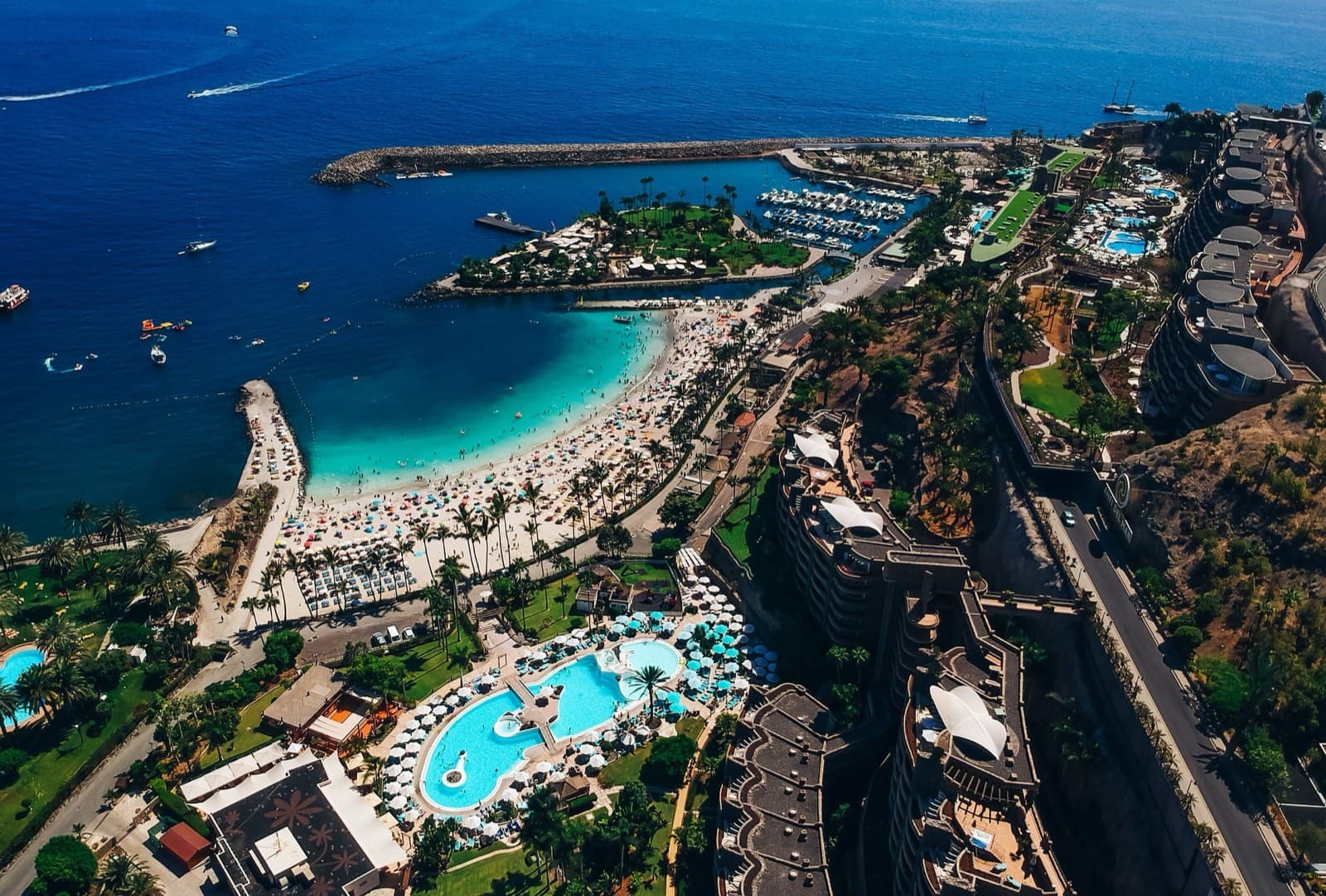
This is where Smart Finanz is based
The Canaries are not one more region on a map for us. This is the market where the business learned its trade — its banks, its valuers and its timings — and the criteria we now apply on the mainland came from here.
It is also where our network of partner estate agencies exists, alongside Madrid. In practice that changes the starting point: a lot of purchases reach us with the property already chosen, and the work begins with the financing rather than with the search.
The islands have their own tax, and it is lower
There is no VAT in the Canary Islands. New homes are charged IGIC at 7% rather than the 10% that applies on the mainland, and the stamp duty on that purchase is 1% — the Canaries are the only region in Spain with a rate of its own for a purchase charged IGIC.
Put together, a new-build purchase here carries 8% in tax against 11.2% in Andalusia. On resale property you pay transfer tax at 6.5% instead, with four reduced rates that depend on the buyer and have to be claimed.
Who we usually help here
Island economies lean heavily on tourism and services, and that shows up in the paperwork: a lot of self-employment, a lot of salaries with a variable component, and a fair amount of seasonal income. Those are perfectly fundable profiles — but presented badly they read as unstable.
Much of the job is telling the bank what the numbers already say: how recurring the income really is, how long it has been there, and the difference between a quiet season and a downward trend. That is where an application of this kind is won or lost.
Areas we cover
Gran Canaria. Las Palmas concentrates year-round housing; the south is second homes and foreign buyers. Two markets on one island.
Tenerife. The same split again — a metropolitan north and a resort south. It has a page of its own, linked below.
Lanzarote. A small market with strict planning rules. Worth checking the registry and planning position before you even discuss price.
Fuerteventura. Plenty of new build and plenty of buyers from off the island. New build means the sum is IGIC and stamp duty, not transfer tax.
A free feasibility study before you reserve anything
Financing for residents, the self-employed, second homes and investment
A network of partner estate agencies across the islands
Frequently asked questions
Why is buying in the Canary Islands cheaper in tax terms?
Because the islands use IGIC instead of VAT. A new home is charged 7% rather than 10%, and stamp duty on that purchase is 1%. On resale property transfer tax is 6.5%.
I am self-employed. Will a Spanish bank lend to me?
Yes, but the application has to be built. What counts is how long you have been trading, your declared income, seasonality, and whether your bank movements line up with your tax returns.
Can the whole purchase be done from abroad?
Most of it, yes. You will need a NIE and a Spanish account, and the signing itself can be handled with a power of attorney. The part that takes longest is evidencing where the funds come from.
Which island should I buy on?
It depends on whether you are buying to live, to let or both, and on how seasonal you are willing to be. We work across all four of the areas listed and can compare the numbers side by side before you commit to one.